



When something doesn’t seem right with their new baby, parents are naturally concerned and want answers. Often birth injury signs and symptoms are identified right away. Sometimes, symptoms can appear well after birth or sometimes weeks and months after delivery when a child begins to miss developmental milestones that are normally reached around certain ages.
A difficult delivery or NICU stay doesn’t always mean that a birth injury occurred. Babies can have problems feeding or with movement and even delays in development. Many of these signs can have other medical explanations that do not involve birth trauma. Understanding what to look for can help parents know what questions to ask and when additional medical evaluation may be appropriate. Seeking out the advice from a Michigan Birth Injury lawyer can also support parents in need of more information.
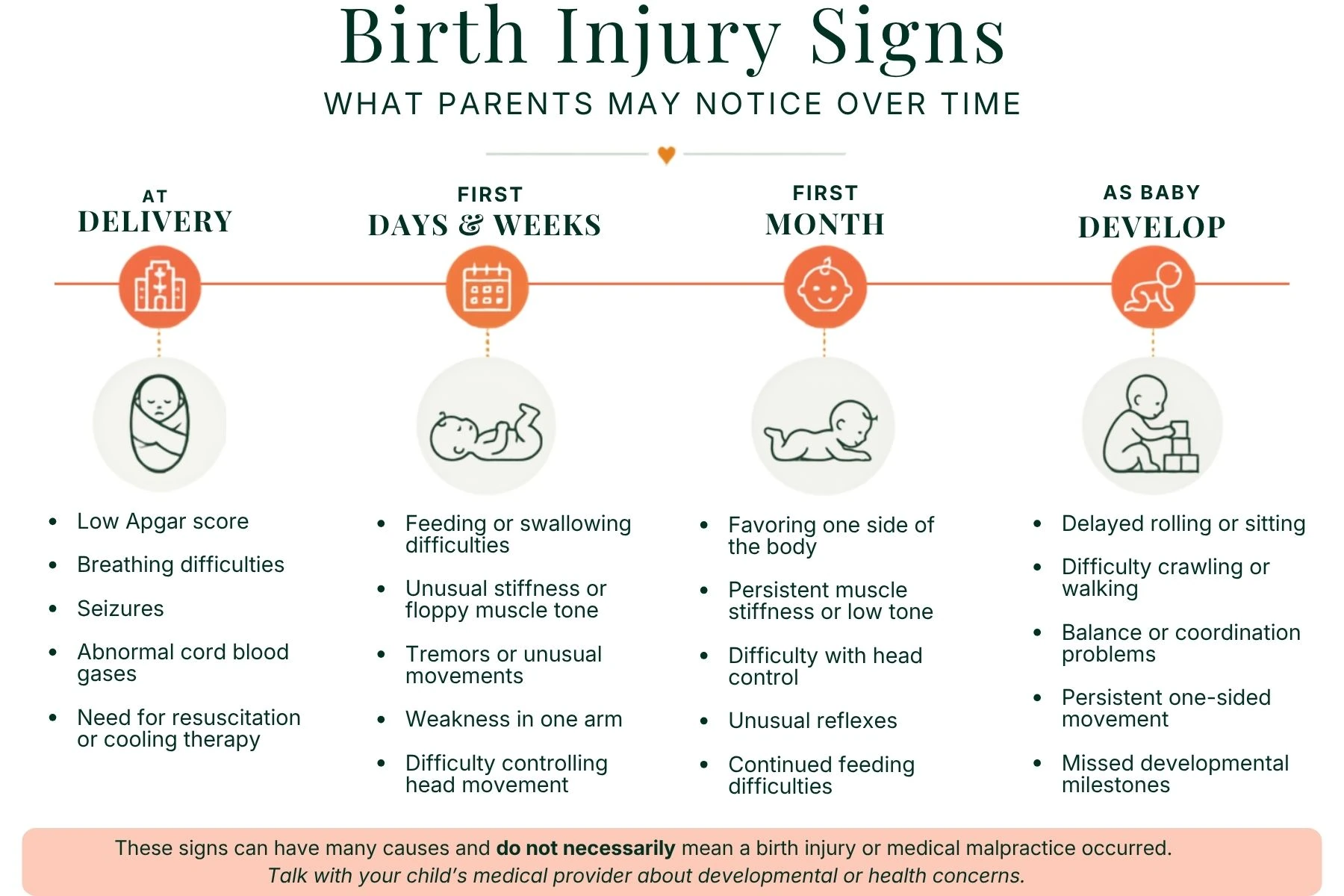
Signs of a Birth Injury at or Immediately After Delivery
Some potential signs of a birth injury can appear during labor, at delivery, or within the baby’s first hours of life.
These signs could indicate that a birth injury occurred:
- A low Apgar score
- Difficulty breathing or the need for respiratory assistance
- Seizures
- Abnormal heart rate or fetal monitoring during labor
- Abnormal umbilical cord blood gas results
- Poor muscle tone or unusual stiffness
- Difficulty moving an arm or leg
- Problems feeding or sucking
- The need for resuscitation after delivery
- An unexpected admission to the NICU
An important note for parents: none of these signs, on their own, establish that medical malpractice occurred. A premature baby or an infant born with an underlying medical condition, for example, may need significant medical intervention despite receiving appropriate care. However, the circumstances surrounding these signs can sometimes raise questions about what occurred before or during delivery.
Hypoxic-Ischemic Encephalopathy (HIE)
One serious condition that may be identified shortly after birth is hypoxic-ischemic encephalopathy (HIE). Signs can include seizures, abnormal muscle tone, difficulty breathing, poor reflexes, or decreased responsiveness. Hypoxic Ischemic Encephalopathy (HIE) is the name for brain damage that occurs when a baby’s developing brain is deprived of oxygen or blood.
- Hypoxic means lack of or insufficient oxygen.
- Ischemic means lack of or insufficient blood flow.
- Encephalopathy is defined as disease or damage to the brain.
The fact that a child develops HIE does not by itself establish that medical negligence occurred. Determining why the oxygen deprivation happened and whether it could have been prevented requires a careful review of the pregnancy, labor, delivery, fetal monitoring, and medical response.
Once childbirth is underway, other risk factors that can contribute to HIE include:
- Abnormal fetal heart-rate patterns, including repeated drops in the baby’s heart rate (decelerations) or a very slow heart rate
- Umbilical cord problems, including a compressed cord, a cord that slips into the birth canal before the baby, or a cord wrapped tightly around the baby.
- Placental abruption, when the placenta separates from the uterus before delivery and disrupts the baby’s oxygen supply.
- Too many or overly strong contractions, which may prevent the baby from getting enough oxygen between contractions.
- A long, difficult, or stalled labor, especially if the baby is showing signs of distress.
- A difficult position during delivery, including breech birth, when the baby is feet-first, or another position that makes delivery harder.

Real Client Stories – Shelby
“I kind of knew something was wrong.”
The doctors tried to tell me that her behavior was normal.
Signs of a Birth Injury in the First Weeks and Months
Other birth injury signs may become more noticeable after a baby goes home.
Parents are often the first people to recognize that their baby is feeding differently, moving one side of the body differently, or not progressing in the same way they expected. Discussing these concerns with your pediatrician at the first few doctor’s visits is important.
Potential signs can include:
- Difficulty feeding, sucking, or swallowing
- Frequent choking or coughing during feeding
- Unusual stiffness or rigidity
- Very loose or “floppy” muscle tone
- Persistent arching of the back
- Tremors or seizure-like movements
- Difficulty controlling head movement
- Favoring one side of the body
- Limited movement of an arm or hand
- Unusual reflexes
- Delays in rolling over, sitting, crawling, or walking
A child who displays one or more of these symptoms should be evaluated by an appropriate medical professional. Early medical evaluation can help identify the cause and determine whether therapy, treatment, or additional testing may be beneficial.
Arm Weakness and Erb’s Palsy
Parents may notice that a newborn is not moving one arm normally or that one arm appears weaker than the other. In some cases, this can be associated with an injury to the brachial plexus—the network of nerves that carries signals from the spinal cord to the shoulder, arm, and hand.
Brachial plexus injuries can happen during birth and severity can vary significantly. Some improve with time and therapy, while others may result in lasting weakness or limited movement.
The major causes of Erb’s Palsy are:
- Large babies
- Prolonged or complicated labor
- Breech birth (baby is not coming out head first)
- Use of forceps
- Baby spends an extended amount of time in the birth canal
- Difficulty delivering the shoulder (after head has emerged), known as shoulder dystocia
You can learn more about brachial plexus and Erb’s palsy including how these injuries may occur during delivery.
Signs if Cerebral Palsy
Some neurological injuries are not immediately apparent at birth. Instead, parents and pediatricians may begin noticing differences as a baby develops. Cerebral palsy (CP) affects a person’s ability to move and maintain balance and posture. CP can be caused by abnormal brain development either in utero and during birth injury can occur.
Other possible signs of cerebral palsy may include:
- Delayed developmental milestones
- Difficulty holding up the head
- Unusual muscle stiffness
- Very loose muscle tone
- Favoring one side of the body
- Difficulty sitting without support
- Problems with balance or coordination
- Abnormal reflexes
- Difficulty crawling or walking
- Feeding or swallowing difficulties
The timing and severity of symptoms can vary considerably from child to child.
According to data cited by the CDC, approximately 1 in 345 children in the United States has been identified with cerebral palsy. Importantly, cerebral palsy can have many different causes. Premature birth is a significant risk factor, and not every case of cerebral palsy is related to a birth injury or medical negligence.
Parents should monitor their child’s milestone development and if differences are noted they should discuss them with their child’s pediatrician or another appropriate medical professional.
For families who have questions about whether a cerebral palsy injury occurred during pregnancy, labor, or delivery may have contributed to their child’s condition, learning more about and seeking the support of a birth injury attorney may also be helpful.
When Birth Injury Signs May Point to Medical Malpractice
A birth injury and medical malpractice are not the same thing.
Childbirth can involve serious complications even when doctors, nurses, and other healthcare providers respond appropriately. A potential malpractice claim in Michigan focuses on a different question: Did the medical professionals involved meet the appropriate standard of care under the circumstances? The basics of medical malpractice must be met.
For example, a legal and medical review might examine whether providers:
- Appropriately monitored the baby’s heart rate during labor
- Recognized signs of fetal distress
- Responded appropriately to concerning fetal monitoring patterns
- Ordered a C-section when medically indicated
- Performed a C-section without an unreasonable delay
- Properly managed medications used during labor and delivery
- Recognized and responded to maternal complications
- Used appropriate techniques during a difficult delivery
- Properly monitored the newborn following delivery
Determining whether a birth injury may have been preventable often requires reviewing the complete medical record, including prenatal records, fetal monitoring strips, medication records, labor and delivery notes, operative reports, cord blood results, neonatal records, and other relevant information.
Medical experts can then evaluate whether the care met the applicable standard and, if it did not, whether that failure caused or contributed to the child’s injury.
How Can Parents Find Out What Happened During Delivery?
For parents, one of the most difficult aspects of a possible birth injury can be simply trying to understand what happened.
The medical records can provide important information about the pregnancy, labor and delivery. In a potential birth injury case, particular attention may be given to records showing:
- The baby’s heart rate during labor
- Changes in the fetal heart tracing
- When physicians were notified of concerning developments
- Decisions regarding a C-section
- Medications administered during labor
- The baby’s condition immediately after birth
- Apgar scores
- Cord blood gas results
- Examination of the placenta after delivery
- Resuscitation efforts
- NICU treatment
- Neurological testing or imaging
These medical records can help medical malpractice attorneys and the medical experts they use reconstruct what happened. They will create a timeline and determine whether the baby’s condition was related to the events during labor and delivery.
They can also help answer a question many parents have: Was my baby’s injury preventable?
Sometimes the answer is no. Sometimes the medical evidence raises additional questions. A careful records review is often necessary before that distinction can be made.
Michigan Deadlines for Birth Injury Claims
Michigan has deadlines for filing medical malpractice claims, including claims involving injuries to children, (MCL 600.5851). However, the rules involving minors can differ from the deadlines that apply to an adult’s medical malpractice claim.
Michigan law contains provisions that can extend the time available in certain cases involving minors. Because these rules depend on the circumstances of the individual case, parents should not assume either that they have plenty of time or that it is already too late to have a potential claim reviewed.
Even when additional time may be available because the injured patient is a child, there are practical reasons to investigate a possible birth injury sooner.
Medical records need to be obtained and reviewed. Witnesses’ memories can fade. Healthcare professionals change jobs. Evidence that helps explain what happened during labor and delivery may be easier to evaluate closer to the time of the events.
Speaking with a Michigan birth injury lawyer can help parents understand what information may be relevant and what deadlines may apply to their child’s particular circumstances.
No. Cerebral palsy can have different causes and risk factors, and not every case is associated with an injury during birth or medical negligence. Prematurity and gestational age are important risk factors. In some situations, however, events before or during delivery may contribute to brain injury. Determining whether medical care played a role requires an individualized review of the circumstances.
Early signs can include:
– Difficulty breathing after birth
– Seizures
– Low Apgar scores
– Abnormal muscle tone
– Difficulty feeding or sucking
– Limited movement of an arm or leg
– An unexpected NICU stay
– The need for cooling therapy
Other signs may not appear until later, including abnormal muscle tone, movement difficulties, or delays in developmental milestones. These symptoms can have many possible causes. Parents who are concerned about their baby’s health or development should seek an appropriate medical evaluation.
It is often impossible for a parent to determine this from the outcome alone.
A qualified medical expert can evaluate whether the standard of care was breached and if the outcome would have been different. A review may include fetal monitoring strips, labor and delivery records, medication records, C-section timing, neonatal records, imaging, and other medical evidence.
Michigan has special rules [MCL 600.5851] that can affect filing deadlines when the injured person is a minor. The deadline depends on the facts of the case, and families should not rely on general medical malpractice deadlines without having their particular circumstances evaluated by an experienced birth injury attorney. Michigan’s deadlines for birth-injury and pediatric medical-malpractice claims are complex, and an experienced birth-injury attorney is required to calculate important dates and deadlines.
Because missing a deadline can end a claim, contact an experienced birth-injury attorney promptly if you believe medical negligence may have harmed your child.
Even if additional time may be available, investigating a potential claim promptly can help preserve medical records, evidence, and information about what occurred.
There is no one-size-fits-all answer. Birth-injury and other pediatric medical-malpractice claims have different rules than other personal-injury cases. The applicable deadline may depend on the child’s age, the type of injury, date of treatment/care, when a claim was discovered, and pre-suit procedures.
Do not assume you have a particular age by which you need to take action. Contact our office promptly for a confidential review of your situation.