



RECENT COURT NEWS
The Michigan Supreme Court recently issued an important procedural decision that will affect how trial courts evaluate motions to amend witness lists in civil litigation. At Giroux Pappas Law, we closely follow developments from Michigan’s courts because these decisions shape litigation strategy and trial practice throughout the state. Attorney Andrew Laurila offers the following summary of the Court’s opinion.
What trial attorneys should know about the Court’s latest guidance on witness disclosures.
By: Andrew Laurila, Attorney
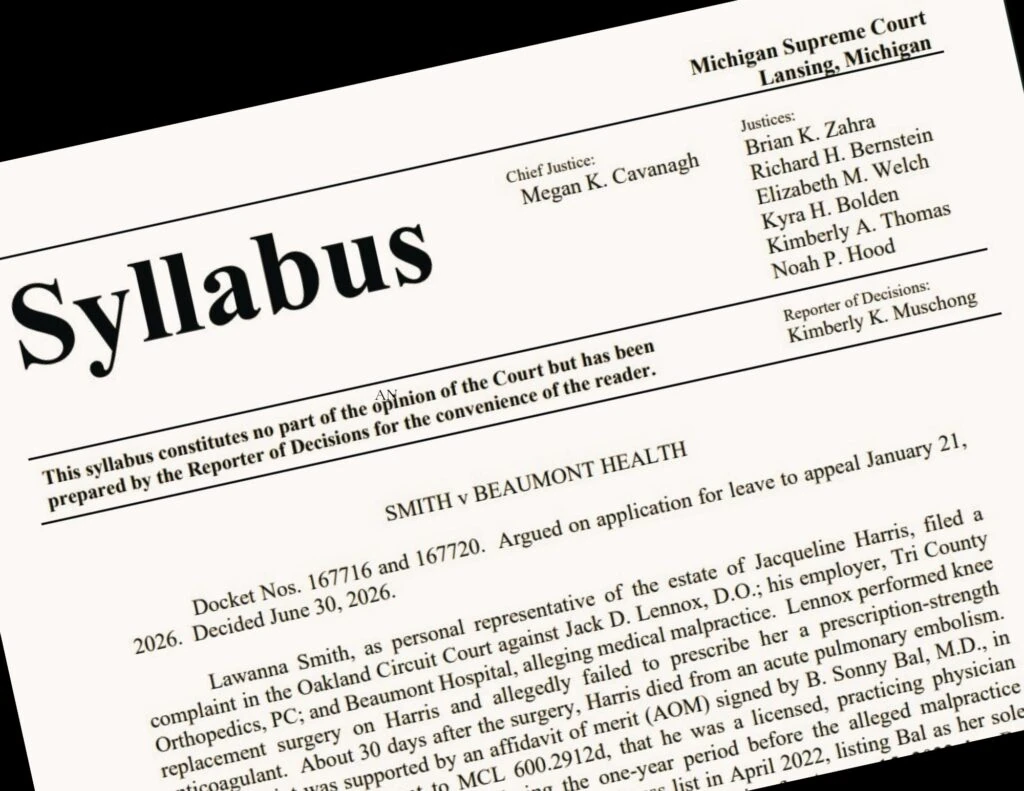
In Smith v Beaumont, our Supreme Court reversed the Court of Appeals’ decision that a trial court must consider the Dean factors [see Dean v Tucker, 182 Mich App 27 (1990)] when evaluating a party’s motion to amend its witness list. Smith clarifies that the correct standard is set forth in MCR 2.401(I)(2), which states that a “court may order that any witness not listed in accordance with this rule will be prohibited from testifying at trial except upon good cause shown.”
Relevant considerations for this “good cause” analysis are: (i) the moving party’s diligence; and (ii) prejudice. With regard to a party’s diligence, such considerations include, but are not limited to, the timeliness of a party’s motion to amend its witness list after discovering the unavailability of a witness; the absence of repeated previous delays; whether the discovery period has concluded; the effect on mediation (i.e. case evaluation); and whether the party was made aware of a need to obtain another witness. In terms of prejudice, the lack of diligence itself may be prejudicial to the opposing party because of the increased costs of unnecessary litigation, for example, when the originally proposed expert witness has already been deposed, or when a substitute expert provides a different theory of the case (i.e. trial by surprise). Whether the party making the request may be prejudiced by denial of the motion is also relevant in assessing whether there is “good cause” to grant a motion to amend. This list is non-exhaustive and can be supplemented by any additional relevant case law.
The aforementioned Dean factors remain applicable for imposing discovery sanctions under MCR 2.313(B), which addresses the failure to comply with orders compelling discovery. The factors to be considered under Dean when a party is being sanctioned and prevented from calling a witness include:
- (1) whether the violation was willful or accidental;
- (2) the plaintiff’s history of refusing to comply with discovery requests or disclose witnesses;
- (3) the prejudice to the defendant;
- (4) notice to the defendant of the witness and how long before trial notice was received; (5) whether the plaintiff engaged in deliberate delay;
- (6) the plaintiff’s compliance with other provisions of the court’s order;
- (7) any attempt by the plaintiff to timely cure the defect; and
- (8) whether a lesser sanction would better serve the interests of justice. Dean, 182 Mich App at 32–33.
The full Supreme Court opinion, which has not yet been published in either Michigan Reports or North Western Reporter but will be soon. For additional information about this opinion see SMITH v BEAUMONT HEALTH– Michigan Supreme Court/Syllabus.
About the Author
Andrew J. Laurila is a personal injury attorney at Giroux Pappas whose background inspires his ambition to pursue justice for all of his clients who have experienced serious injury. With over a decade of experience litigating personal injury cases, insurance claims, and business litigation, Andrew offers a high level of strategic expertise and legal discernment to his cases.
Andrew has been selected for the Michigan Super Lawyers Rising Stars list, as well as the U.S. News Ones to Watch list in civil rights law, labor & employment law, and personal injury litigation. Furthermore, Andrew is a published author who has written an article specifically about wrongful death actions, examining the history of parental nurture damages and advocating for a replacement services model to calculate these losses. These accomplishments reflect the dedication and integrity Andrew brings to every client he represents.


